
Feb
23,
2026
In modern combat, your communication link is only as reliable as your antenna. This detailed guide from Eteily Technologies investigates the vital ...


World's Best Antenna Manufacturing Company "Eteily Technologies India Pvt Ltd"
World's Best Antenna Manufacturing Company "Eteily Technologies India Pvt Ltd"


Feb
23,
2026
In modern combat, your communication link is only as reliable as your antenna. This detailed guide from Eteily Technologies investigates the vital ...
Feb
20,
2026
Building a smart city involves more than just sensors; it also necessitates an effective RF strategy. Learn how Eteily Technologies is addressing ...
Feb
16,
2026
In 2026, 6G technology is expected to transform wireless communication, thanks to breakthroughs in terahertz antenna design, AI-powered ...
Feb
14,
2026
As the globe transitions to high-speed, data-driven electric vehicles, connection has become as important as energy. This deep dive looks at how ...
Feb
10,
2026
Have you ever wondered how your wearable medical equipment stays connected and consistently sends vital indicators to your doctor? Dive into the ...
Feb
06,
2026
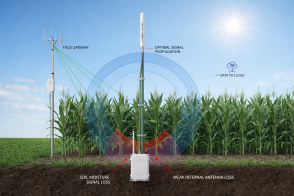
Don't let a weak signal affect your harvest results. This book delves into the vital function of antennas in agricultural soil sensors, discussing ...
Feb
03,
2026
Speed, range, or battery life? In the world of wireless hardware, you can't always have it all. This deep dive explores the 2026 landscape of ...
Jan
29,
2026
Ever wondered what truly makes a wireless "metaverse" possible? While we focus on the graphics, a hidden revolution is happening inside the ...
Dec
23,
2024
The Internet of Things (IoT) has revolutionized how devices communicate, share data, and automate processes. From smart homes to industrial ...
Dec
03,
2024
The 5G RF module plays a vital role in enabling the transmission and reception of high-speed data in 5G communication systems.
Nov
18,
2024
RF (Radio Frequency) Modules are components that enable wireless communication between devices by transmitting and receiving radio waves in the RF ...
Oct
07,
2024
Auto GPS tracking devices are widely used for a variety of reasons, whether for personal vehicles or commercial fleets. They provide numerous ...
Jul
01,
2024
In today's interconnected world, satellite navigation has become an integral part of everyday life, facilitating everything from driving ...
May
30,
2024
Modern GNSS receivers, especially in smartphones, automotive navigation systems, and professional surveying equipment, commonly support multiple ...
May
22,
2024
Modern GPS units are designed to operate independently, but it's important to check for any potential signal interference, especially if both ...
May
14,
2024
GPS tracker for personal car tracking involves considering factors such as real-time tracking accuracy, ease of use, battery life, and ...
May
06,
2024
Remember to consult datasheets and application notes for the specific antennas you're using, as well as any relevant guidelines provided by your ...
Apr
29,
2024
Implementing IoT devices and networks involves several security considerations to safeguard against potential vulnerabilities and attacks.
Apr
22,
2024
Wi-Fi extenders are valuable tools for improving Wi-Fi coverage and signal strength in areas where the original Wi-Fi signal is weak or limited. ...
Apr
17,
2024
GPS navigation systems provide users with a convenient and reliable way to navigate unfamiliar areas, whether they are driving, walking, cycling, ...

In the high-stakes world of modern defense, communication is essential to every mission. Whether it's a covert operation in dense forest or an armored division advancing across wide desert, one key component determines data transmission security and reliability: the antenna.
Eteily Technologies, a global leader in RF technologies, offers cutting-edge antenna systems for 2026's tactical environments. This tutorial looks at the issues, comparisons, and solutions for defense and tactical communication antennas.
Tactical situations are notoriously unforgiving. Standard commercial antennas frequently fail owing to the unique conditions of the battlefield.
RF Signature Exposure: Traditional omnidirectional antennas broadcast in all directions, serving as a "beacon" for hostile EW systems to find and target friendly forces.
Signal Jamming and Interference: Adversaries utilize powerful jammers to interrupt GNSS (GPS) and voice links, resulting in "denied environments" where coordination is difficult.
Physical vulnerability: Antennas are frequently the most exposed component of a vehicle or manpack. Constant vibration, severe temperatures, and ballistic impact can render a communication system inoperable.
The "Line-of-Sight" Limitation: In urban combat or hilly terrain, physical impediments block signals, necessitating antennas that use NVIS (Near Vertical Incident Skywave) or drone-mounted relays.
The platform and mission profile determine which antenna is best suited. Here's a rundown of the most popular tactical antenna types:
| Antenna Type | Platform | Frequency Range | Key Advantage |
|---|---|---|---|
| Tactical Whip | Manpack / Handheld | VHF/UHF (30–512 MHz) | Flexible, lightweight, and rugged for foot soldiers. |
| Vehicular Monopole | Armored Vehicles | HF/VHF/UHF | High durability; capable of wideband networking on the move. |
| Blade Antennas | UAVs / Aircraft | UHF/L-Band/S-Band | Aerodynamic, low-profile design to reduce drag. |
| CRPA (Controlled Reception Pattern) | Fixed/Mobile | GNSS (L1, L2, L5) | Anti-Jamming: Can "null" out interference from enemy jammers. |
| High-Gain Dish | Command Centers | SATCOM (X, Ku, Ka-Band) | Long-range, high-throughput data for strategic command. |
When selecting antennas for foreign defense contracts, prioritize the following four technical benchmarks:
A. Frequency Agility and Bandwidth.
Modern radios are Software-Defined Radio (SDR). Your antenna must be capable of wideband operation (e.g., 30 MHz to 2500 MHz) in order to allow frequency hopping without switching gear.
B. Gain Versus Stealth.
High-gain antennas provide more range, but they are more directional. For tactical teams, a compromise is required: low-profile conformal antennas that blend into the vehicle's skin provide stealth, whereas directional patch antennas are ideal for point-to-point secure links.
C. Environmental Ruggedization.
Ensure that the antenna fulfills MIL-STD-810H specifications. This assures performance in the following conditions:
D. Polarisation.
Circular Polarization is the best method for communicating between drones and ground robots. It minimizes "multi-path" interference and ensures a stable link even when the platform tilts or rotates.
Q: Can we use civilian LTE antennae as tactical backups?
A: Generally, no. Civilian antennas lack the encryption-ready shielding and durable housings needed to withstand EW situations and physical conflict.
Q: What is "beam-nulling" in defense antennas?
A: It is a technology employed in CRPA antennas in which the system detects the direction of a jammer and electronically generates a "blind spot" in that direction to preserve the legitimate signal.
Q: How do we extend the range in "dead zones"?
A: Eteily recommends using Tethered Drone Antennas or portable repeaters to lift the antenna node over trees and buildings, thereby doubling the line-of-sight range.
Eteily Technologies bridges the gap between complex military needs and scalable manufacturing. Our choices for the overseas defense market are:
Anti-Jam GNSS Solutions: Our multi-element antenna arrays ensure that PNT (positioning, navigation, and timing) remains accurate even in contested environments.
Custom RF Engineering: We design unique internal and patch antennas for portable devices with restricted space and weight (SWaP).
High-Performance Connectors: A tactical antenna is only as effective as its connectivity. Our SMA and TNC connectors are engineered for minimal insertion loss and optimum endurance.
Global Compliance: We produce to ISO 9001 standards, ensuring that our goods exceed the stringent quality requirements of NATO and other international defence forces.






niot yet
We need antenna they support multiband (L1,L2,L5) for UAV