
Feb
23,
2026
In modern combat, your communication link is only as reliable as your antenna. This detailed guide from Eteily Technologies investigates the vital ...


World's Best Antenna Manufacturing Company "Eteily Technologies India Pvt Ltd"
World's Best Antenna Manufacturing Company "Eteily Technologies India Pvt Ltd"


Feb
23,
2026
In modern combat, your communication link is only as reliable as your antenna. This detailed guide from Eteily Technologies investigates the vital ...
Feb
20,
2026
Building a smart city involves more than just sensors; it also necessitates an effective RF strategy. Learn how Eteily Technologies is addressing ...
Feb
16,
2026
In 2026, 6G technology is expected to transform wireless communication, thanks to breakthroughs in terahertz antenna design, AI-powered ...
Feb
14,
2026
As the globe transitions to high-speed, data-driven electric vehicles, connection has become as important as energy. This deep dive looks at how ...
Feb
10,
2026
Have you ever wondered how your wearable medical equipment stays connected and consistently sends vital indicators to your doctor? Dive into the ...
Feb
06,
2026
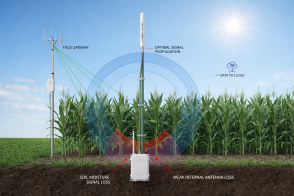
Don't let a weak signal affect your harvest results. This book delves into the vital function of antennas in agricultural soil sensors, discussing ...
Feb
03,
2026
Speed, range, or battery life? In the world of wireless hardware, you can't always have it all. This deep dive explores the 2026 landscape of ...
Jan
29,
2026
Ever wondered what truly makes a wireless "metaverse" possible? While we focus on the graphics, a hidden revolution is happening inside the ...
Dec
23,
2024
The Internet of Things (IoT) has revolutionized how devices communicate, share data, and automate processes. From smart homes to industrial ...
Dec
03,
2024
The 5G RF module plays a vital role in enabling the transmission and reception of high-speed data in 5G communication systems.
Nov
18,
2024
RF (Radio Frequency) Modules are components that enable wireless communication between devices by transmitting and receiving radio waves in the RF ...
Oct
07,
2024
Auto GPS tracking devices are widely used for a variety of reasons, whether for personal vehicles or commercial fleets. They provide numerous ...
Jul
01,
2024
In today's interconnected world, satellite navigation has become an integral part of everyday life, facilitating everything from driving ...
May
30,
2024
Modern GNSS receivers, especially in smartphones, automotive navigation systems, and professional surveying equipment, commonly support multiple ...
May
22,
2024
Modern GPS units are designed to operate independently, but it's important to check for any potential signal interference, especially if both ...
May
14,
2024
GPS tracker for personal car tracking involves considering factors such as real-time tracking accuracy, ease of use, battery life, and ...
May
06,
2024
Remember to consult datasheets and application notes for the specific antennas you're using, as well as any relevant guidelines provided by your ...
Apr
29,
2024
Implementing IoT devices and networks involves several security considerations to safeguard against potential vulnerabilities and attacks.
Apr
22,
2024
Wi-Fi extenders are valuable tools for improving Wi-Fi coverage and signal strength in areas where the original Wi-Fi signal is weak or limited. ...
Apr
17,
2024
GPS navigation systems provide users with a convenient and reliable way to navigate unfamiliar areas, whether they are driving, walking, cycling, ...

In the world of Augmented Reality (AR) and Virtual Reality (VR), we frequently marvel at high-resolution displays, haptic gloves, and smooth spatial audio. But there is a silent hero hiding inside these elegant headsets: the antenna.
Without advanced antenna systems, the "reality" in AR/VR would quickly devolve into sluggish, fragmented frames. Let's look at how these little components enable the seemingly unbelievable.
For a VR experience to feel "real," the time between your movement and the visual update (known as Motion-to-Photon latency) must be less than 20 milliseconds. When the antenna fails to transmit data quickly enough, users feel motion sickness and a "break" in presence.
Designing antennas for wearables is notoriously challenging due to us, the humans. The human body is mainly water, which functions as a large "absorber" of radio frequency (RF) impulses.
| Technology | Role in AR / VR |
|---|---|
| Massive MIMO | Uses multiple antennas to send and receive more data simultaneously. |
| Beamforming | Dynamically “aims” the wireless signal directly at the headset for a stronger, more reliable link. |
| Transparent Antennas | Integrated into the glass lenses of AR glasses to save space without blocking vision. |
| Metasurfaces | Ultra-thin layers that manipulate electromagnetic waves in ways traditional antennas cannot. |
The transition to 5G and WiFi 6E is the ultimate game changer for the industry.
As we approach 6G, we are considering Joint Communication and Sensing (JCAS). Future antennas will not only broadcast data, but also operate as radar, sensing the room's geometry and the user's hand movements, avoiding the need for bulky external sensors.
Antennas are considerably more than just "receivers"; they are the link between the real and digital worlds. As they become smaller, more efficient, and "intelligent," the line between our world and the virtual one will become increasingly thin.






Comments : 0